

Metal-organic framework, (noun, “MEH-tal Or-GAN-ik FRAYM-werk”)
Metal-organic frameworks — or MOFs — are a type of material made of metal– and carbon-based molecules. These molecules are linked together into complex, 3-D shapes.
Imagine a house that’s being built. After laying the foundation, builders construct a skeleton-like wooden frame. This framework consists mostly of empty space. MOFs are structured much the same way. Their molecules assemble into a scaffold-like material. And like that wooden frame, an MOF’s interior is also mostly empty space.
Unlike the holes of a sponge, the empty spaces inside an MOF are not random. Scientists can choose the sizes, shapes and chemistry of these gaps. That’s important. It allows scientists to custom-make MOFs for specific tasks. A very porous MOF may be especially good at sopping up substances. Another MOF with certain chemistry may work like a filter, letting some substances through it but blocking others.
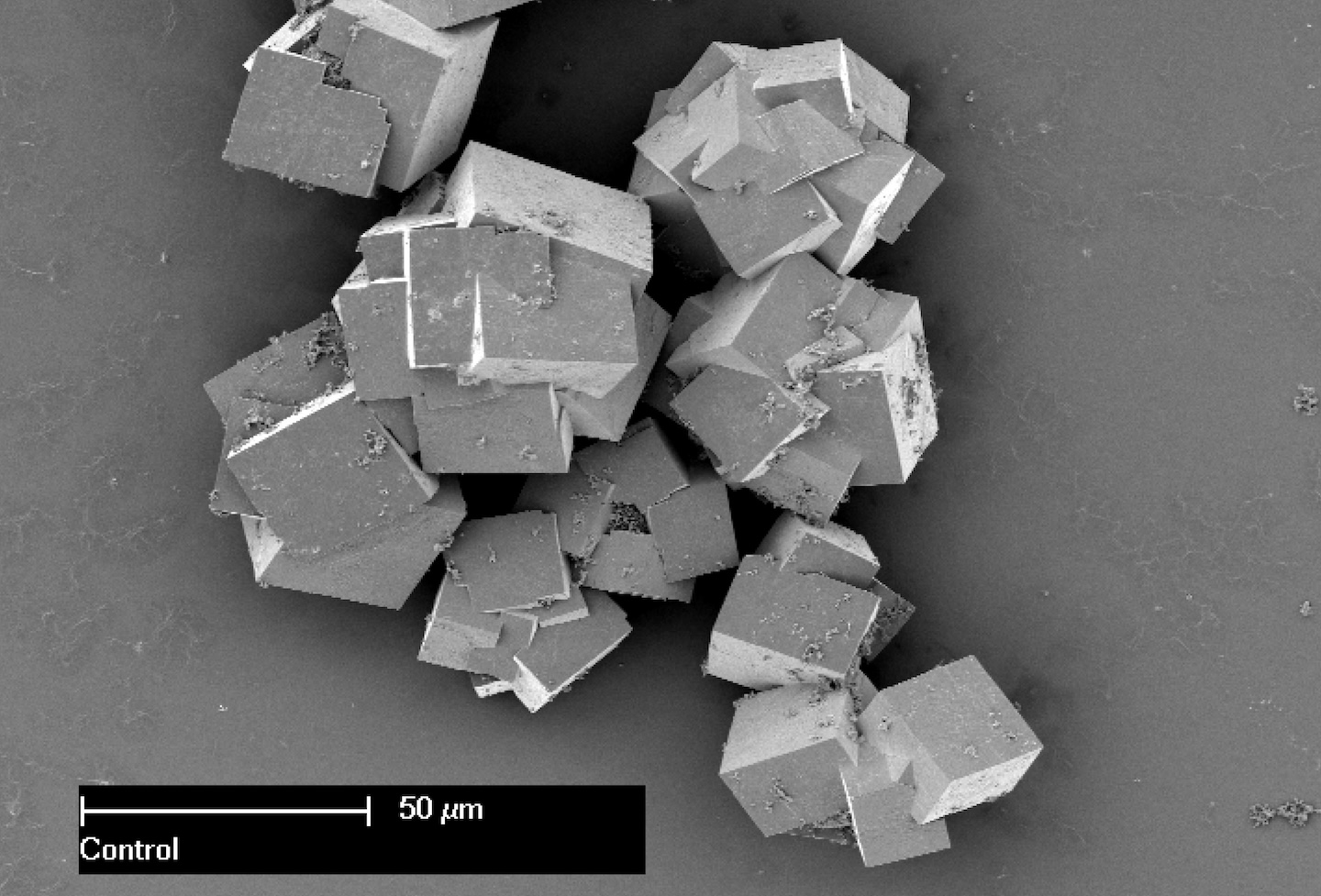
Scientists custom-build MOFs for many different uses. In medicine, MOFs may tote drugs to specific places inside the body for release. Or they might release medicines only under certain conditions.
MOFs may also help manage climate change by absorbing carbon dioxide (CO2) from the air. These MOFs often contain exposed metal ions. (An ion is an atom that carries an electric charge.) Those metal ions can bind to the oxygen atoms in CO2 molecules, snatching them out of the atmosphere.
Still other MOFs can pull water from desert air and release it for drinking. Others can filter out harmful wavelengths of sunlight to protect crops. Or they can shield against toxic chemicals. In fact, MOFs have so many uses that they won the 2025 Nobel Prize in chemistry.
In a sentence
Scientists developed metal-organic frameworks (MOFs) that yank pollution from our water sources.