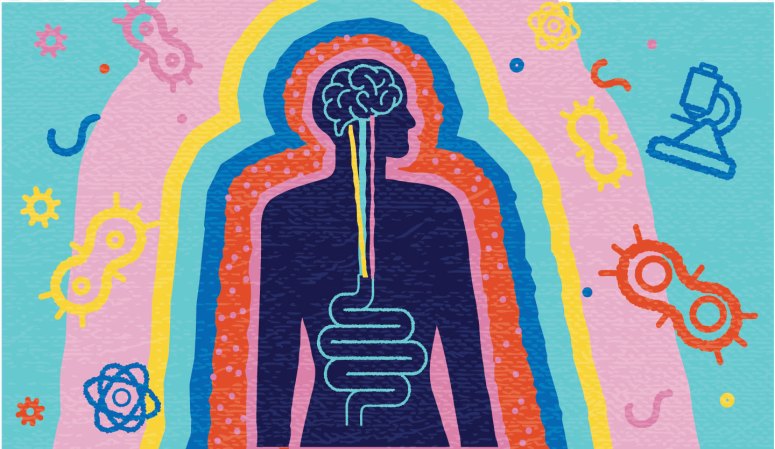
The mind can regulate the immune system. And through directed thinking, people can learn to turn on immune-boosting brain areas, a new study finds.
The idea that the brain can influence the body emerged long ago, says Tor Wager. He’s a neuroscientist at Dartmouth University in Hanover, N.H. But only in the last few years have there been “real breakthroughs in understanding the neuroscience behind this,” he says.
Positive expectations turn on one part of the brain’s reward system. This region triggers the feelings of pleasure we get from eating good food, winning a game or receiving a compliment. Nerve cells in this part of the brain respond to such rewards by releasing the chemical dopamine.
Tamar Koren is a physician scientist at Tel Aviv Medical Center in Israel. She was part of a team that used genetic methods to stimulate these “reward” cells in mice.
Turning on those neurons brought surprising health benefits. The mice were better able to fight bacterial infections and recovered more quickly from heart attacks. Stimulating the animals’ reward circuit even slowed the growth of tumors.
The approach looked so promising that Koren’s team wanted to know if it could work for people, too. But the genetic and molecular tools used in mice can’t ethically be used in humans. Instead, the team trained people to turn on their reward circuits with their own thoughts.
Her team shared details on how they did that in the January 19 Nature Medicine.
Responding to cues
This line of research grew out of work done in the late 1890s by Ivan Pavlov. This Russian scientist studied how our bodies extract energy and nutrients from food. In one famous experiment, he rang a bell every time he got ready to feed a hungry dog. Before long, just the sound of the bell would make the dog start salivating — even when there was no food. Psychologists call this a conditioned response. (For this and related work, Pavlov would take home the 1904 Nobel Prize in physiology or medicine.)
Decades later, Robert Ader and Nicholas Cohen at the University of Rochester’s medical school did something similar in rodents. They gave the animals a cue — here, a sweet drink — at the same time they injected a drug that suppresses the immune system. Eventually, giving rats just the drink could trigger the immune change.
Such an effect is known as psychosomatic (SY-koh-soh-MAT-ik). It means that the brain can trigger changes in the body after some conditioned cue (such as hearing a dinner bell or getting a sweet drink).
That term can carry stigma. It’s often used to describe real health symptoms — such as headaches, pain, nausea or skin changes — that can be triggered or worsened by mood or stress. People might see these health effects as being imagined or trivial.
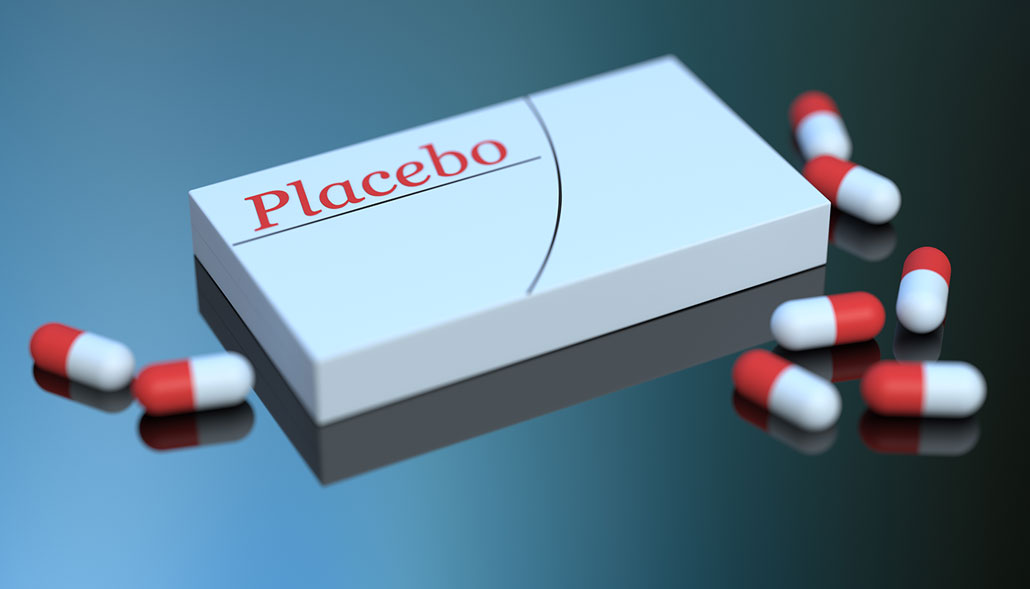
But the opposite also occurs, such as getting relief after taking a sugar pill that looked like an actual drug. This is what’s called the placebo (Pluh-SEE-boh) effect. Some people also dismiss this, saying it’s not real medicine.
Yet it can be. In fact, some researchers view placebos as an opportunity.
The placebo effect reflects real physical changes. The effect may result from having positive expectations or a sense of hope. Whatever causes it, says Koren, “maybe we should understand how it works.” That, she says, might help people respond better to treatments.
Turning on the placebo effect
Her team has now tested that. Working with a psychology lab at Tel Aviv University, they recruited 85 young adults. All were employees who needed a vaccine to work at the medical center. This shot is given to ward off the hepatitis B virus (HBV). Seeing how people responded would offer an easy way to measure immune changes.
For the first phase of the experiment, the recruits had functional MRI (fMRI) scans. They laid in a machine that scans the brain and shows which parts are active. For each 40-second session, participants were told to put their brain to work. Each could choose how they wanted to do so. For instance, they could watch a red dot on the screen. Or recall a trip. Or think about the future. Or solve a math problem.
Afterward, areas of the brain scan got a rating from 0 to 10. Those scores reflected activity in deep-brain regions of the reward pathway. One key region is known as the VTA, short for ventral tegmental area. This is the same area Koren’s team targeted in mice to trigger health benefits.
Some participants were randomly put into a control group. Their scores came from an unrelated brain region.
When someone got a low score, they were asked to focus their thoughts on something else for the next session. If their score rose, they might repeat or refine that thought-focusing strategy. This trial-and-error process, called fMRI neurofeedback, was carried out in 45 to 60 sessions over several weeks. Through it all, participants had one goal: Get the highest score possible.
“The important thing for us was not the absolute score but the improvement,” says Nitzan Lubianiker. He led this study back when he was a graduate student on the team. (He now works as a psychology researcher at Yale University in New Haven, Conn.)
Right after their final fMRI session, each recruit got the HBV vaccine. This shot instructs the body to make antibodies. Those immune proteins recognize hepatitis B virus and help protect the liver from becoming infected by it. Blood tests measured virus antibodies before and two weeks after each person got their shot.
People who had been better at increasing brain activity in the VTA showed a larger rise in HBV antibodies after vaccination. That indicates a stronger immune response.
The improvement was just a 7 to 10 percent increase in HBV antibodies. Still, that was impressive, says Jonathan Kipnis. He was not involved in the research. But he knows about such things: His lab studies brain-immune connections at Washington University in St. Louis, Mo.
Mind-body connection
“We were all surprised that there actually was an effect,” says Koren. The response her team saw in lab mice was less surprising because they directly targeted the nerve cells. But getting people to turn on that region through thoughts alone seemed like “science fiction,” she now says.
And success here did not depend on someone’s personality. People who said on a questionnaire they’re more optimistic or hopeful did not all get higher VTA scores.
But high scorers did have something in common: They tended to choose mental strategies that involve positive expectations. For some, thoughts centered on friends or family. Others focused on experiences. The details didn’t seem to matter, since participants were not told what to think about. Rather, they adjusted their thoughts based on the neurofeedback scores. That was a “cool finding,” says Lubianiker.
The result “emphasizes how much our mental state is relevant to our well-being and day-to-day physiology,” Koren says. “Even if we’re not aware of it.”